Bedridden Patient Home Care Assistance in Sharjah: Pricing
Nov 01, 2026Choosing care at home can make daily support feel more familiar and personal for a bedridden loved one. The cost of bedridden patient home care assistance in Sharjah depends on the patient’s care needs, the hours and frequency of support, and whether nursing tasks are required. Providers set a case-specific price after a quote request, with the care plan and staffing needs shaping the estimate.
Families often value the comfort of staying at home, while also needing a clear view of what care involves and how costs are structured. The right arrangement should reflect the patient’s condition, daily routines and level of assistance, rather than a standard package.
This guide explains how to assess home-care needs, distinguish household help from clinical care, and compare schedules, experience, communication, and contract terms. It also explains how familiar surroundings can fit into a care plan, helping your family make a considered decision.
Key Takeaways
- Compare care plans by matching the patient’s daily support needs with the schedule, staffing and tasks each plan covers.
- Understand how care requirements and hours shape the quote, and review the contract terms before agreeing to an arrangement.
- Consider how familiar surroundings and individual attention may support comfort and continuity at home.
- Assess caregivers’ relevant qualifications, communication approach and provider feedback to make a more informed choice.
Challenges when selecting a home care provider
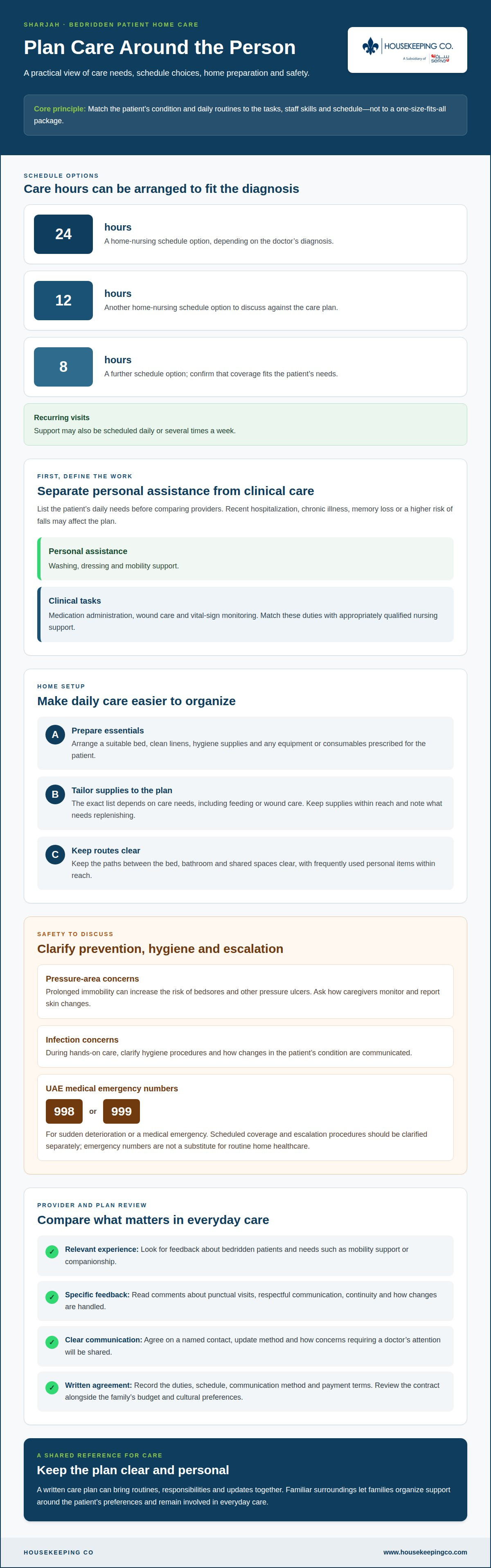
When arranging bedridden patient home care assistance in Sharjah, start by listing the patient’s daily needs, from washing and dressing to mobility support. Recent hospitalization, chronic illness, memory loss, or a higher risk of falls may affect the plan. Separate routine personal assistance from clinical tasks such as medication administration, wound care, and vital-sign monitoring. This makes it easier to identify what kind of support the patient needs, rather than relying on a broad service label.
Next, match the schedule and staff skills to those needs. Home nursing in Sharjah may be arranged for 24, 12 or 8 hours, depending on the doctor’s diagnosis. Recurring visits can also be scheduled daily or several times a week. Ask how updates are shared, how the plan is monitored and adjusted, and who coordinates physiotherapy or emotional support. Clear communication matters when symptoms or routines change.
Prepare the home with a suitable bed, clean linens, hygiene supplies, and any equipment or consumables prescribed for the patient. The exact list depends on the care plan, including feeding or wound-care needs. Keep supplies within easy reach and note what needs replenishing to keep daily care organized.
Prolonged immobility can increase the risk of bedsores and other pressure ulcers. Infection is another concern during hands-on care, so clarify hygiene procedures and how caregivers should report changes in the patient’s skin or condition.
For sudden deterioration or a medical emergency in the UAE, Dr. Sunny advises calling 998 or 999. Ask about scheduled coverage and escalation procedures separately; emergency numbers are not a substitute for routine home healthcare.
Compare the patient’s needs, your budget, cultural preferences, and contract terms together. A plan involving medication administration, for example, requires appropriate nursing support, while daily personal assistance calls for a different arrangement. For bedridden patient home care assistance in Sharjah, record the agreed duties, schedule, communication method, and payment terms. This helps your family compare options without overlooking practical or personal priorities.
Benefits of receiving care in a familiar home environment
At home, a bedridden person remains among familiar rooms, belongings, and daily routines. These details can make communication easier for caregivers, especially when the patient has memory loss or confusion. In Sharjah, home healthcare can support older people and those living with chronic diseases without moving their everyday life into a hospital setting. Families can organize care around the person’s established preferences, such as meal timing or preferred ways to communicate.
Familiar surroundings also let families shape support around individual needs. A care plan can account for where the patient rests, how relatives participate, and which daily activities require assistance. At home, one-on-one attention can be organized around the individual’s routine rather than a shared institutional schedule. Relatives can explain the patient’s usual communication style and preferred comfort items to help make care more personal.
Home support may combine practical assistance with companionship and emotional support. Depending on the patient’s treatment plan, care may also involve medication routines, nursing, or physiotherapy. In regional home care models—such as the medical services offered by Hakeem at Home—qualified nurses manage specialized treatments so families can clearly distinguish clinical tasks from household support. Clear roles make daily care easier to coordinate.
Staying at home can help relatives remain involved in everyday moments, from sharing a meal to discussing the day with a caregiver. Regular updates can help family members understand how support is being delivered. A written care plan gives everyone a shared reference for routines, responsibilities, and changes to discuss with the healthcare team.
The home layout matters, too. Keep routes between the bed, bathroom, and shared spaces clear, and place frequently used personal items within reach. A calm, clean environment can also make daily routines easier to manage. Housekeeping Co’s on-demand hourly cleaning services can help with household upkeep while relatives focus on the patient.
For seniors, care at home keeps familiar surroundings part of everyday life, while support can be arranged around individual needs. This makes home care a personalized option for seniors who wish to remain in a familiar environment.
Checking providers’ backgrounds and reviews
For elderly care in Sharjah, review a provider’s background, ratings, and written feedback together. Look for examples involving bedridden patients, not only general home assistance. A review describing help with daily routines may be relevant, while feedback about unrelated services offers less insight. Compare what reviewers say with the patient’s actual needs, such as mobility support or companionship.
Read individual comments rather than relying on an overall rating alone. Specific feedback about punctual visits, respectful communication, and continuity gives families a clearer picture. Note whether reviewers describe the caregiver’s conduct and the provider’s response when plans change. Repeated comments about the same issue deserve attention, especially when they concern missed visits or unclear updates.
Match staff experience and training to the agreed duties. Someone providing personal assistance has a different role from a nurse handling clinical tasks. Be clear about which responsibilities are household support and which require nursing qualifications. This helps your family identify a suitable care arrangement for the patient’s condition and recovery needs.
Agree on how family members will receive updates about routines and concerns that require a doctor’s attention. A named contact and a clear update method can help prevent misunderstandings. Patience, respectful conversation, and sensitivity are also important when supporting an older person at home.
Use a simple comparison record for each Sharjah provider. Write down background details, review themes, relevant staff experience, visit arrangements, and communication practices. Then compare those points against the patient’s needs rather than choosing by rating alone. For instance, a family prioritizing recovery support can focus on feedback about dependable visits and coordination with the doctor. This structured review makes differences easier to identify and discuss with relatives before agreeing on a care arrangement.
Also assess whether the provider communicates clearly and offers regular checks and updates. Home care providers in Sharjah may tailor support services for people with disabilities, so ask how individual needs are accommodated. Consider flexible availability and schedules, alongside cultural and personal values, when deciding whether a provider’s approach suits the person receiving care.
What qualifications should a home nurse or caregiver for a bedridden patient have?
Match qualifications to the tasks in the patient’s care plan. A caregiver helping with dressing, meals, and mobility needs relevant personal-support experience. Clinical duties such as medication administration or wound care require a professional qualified to perform them. Don’t assume one role covers every need.
Ask about practical experience with bedridden patients, including safe assistance with repositioning and daily routines. Request examples of how the caregiver follows instructions, records changes, and communicates concerns. If the patient needs post-operative support, clarify experience with the specific tasks included in the treatment plan, such as wound care or vital-sign monitoring.
Discuss the patient’s diagnosis and planned duties with the healthcare team. Home nursing in Sharjah may involve medication administration, nursing management, and emergency assistance; the appropriate professional depends on the diagnosis and care required. Physiotherapy should be provided by someone qualified to deliver the planned treatment.
Use these questions to assess suitability before agreeing on an arrangement:
- Which duties has the caregiver or nurse performed for bedridden patients?
- What training relates directly to the patient’s required tasks?
- How are changes in condition recorded and shared with family?
- Which concerns should be escalated to the doctor?
Ask for specific explanations, not broad assurances. If medication routines are part of the plan, establish who administers them and how this is documented. If the need is daily personal care, clarify the caregiver’s responsibilities and limits. Put agreed duties, communication arrangements, and schedules in writing so relatives can understand each role and identify any gaps in support.
Hire Full-Time Live-In/Out Nanny or Maid in Dubai
Housekeeping Co offers full-time live-in or live-out nanny and maid services in Dubai for families seeking dependable household support. This can help organize domestic routines alongside a bedridden relative’s care plan, while clinical nursing and medical tasks remain with appropriate healthcare professionals.
Families can arrange a domestic worker visa or hire a nanny or maid under private sponsorship. The right option depends on your household’s needs and preferred sponsorship arrangement. Housekeeping Co also provides on-demand hourly residential cleaning for separate household cleaning needs.
These services support household management; they do not replace nursing, physiotherapy, or other clinical care. If your family needs domestic staffing or residential cleaning alongside a separate clinical care plan, contact Housekeeping Co to discuss the suitable service.
Plan the Next Step with Confidence
Choosing bedridden patient home care assistance in Sharjah means deciding how your household can support a loved one’s care. First, distinguish the patient’s clinical needs from the domestic help your family needs around them. Keeping those roles separate helps establish a clear, workable routine.
Housekeeping Co can help with household requirements through full-time live-in or live-out maid and nanny placement, domestic worker visa arrangements, or hiring under private sponsorship. These options provide domestic staffing, not nursing or medical treatment. Consider them when household responsibilities need dedicated support alongside a separate clinical care plan.
Start by listing the domestic tasks that need help and the clinical tasks that require a healthcare professional. This distinction can help your family choose an appropriate household support arrangement while keeping the patient’s individual care needs in view.
With a well-defined plan, your family can move forward with greater clarity and confidence.
Share this


