Post-Surgery Recovery Caregiver Support in Abu Dhabi
Nov 02, 2026Recovery at home takes more than time: it takes practical support that fits the patient’s discharge plan. A post-surgery recovery caregiver in Abu Dhabi can help with daily activities such as moving safely, preparing meals, following medication reminders and getting to follow-up appointments. The right household support can make the transition home more manageable while the patient follows the treating team’s instructions.
It’s understandable to want clear answers about what help is appropriate and when it should begin. Post-operative care starts in the clinic and often continues at home after discharge. This article explains what home support may include, how a caregiver can assist with daily living, and what to consider when arranging care in Abu Dhabi. You’ll also learn how household support can complement clinical care, and where to turn when practical help at home is the main need.
Key Takeaways
- Separate clinical tasks from everyday assistance so the support at home matches the patient’s recovery plan.
- Identify which daily activities need help, from safe movement to meals and follow-up appointments.
- Understand how a caregiver’s role differs from that of a home health aide or post-operative nurse.
- Use the discharge plan to organise the transition home and arrange practical support around it.
What Does Post-Surgery Home Care Include?
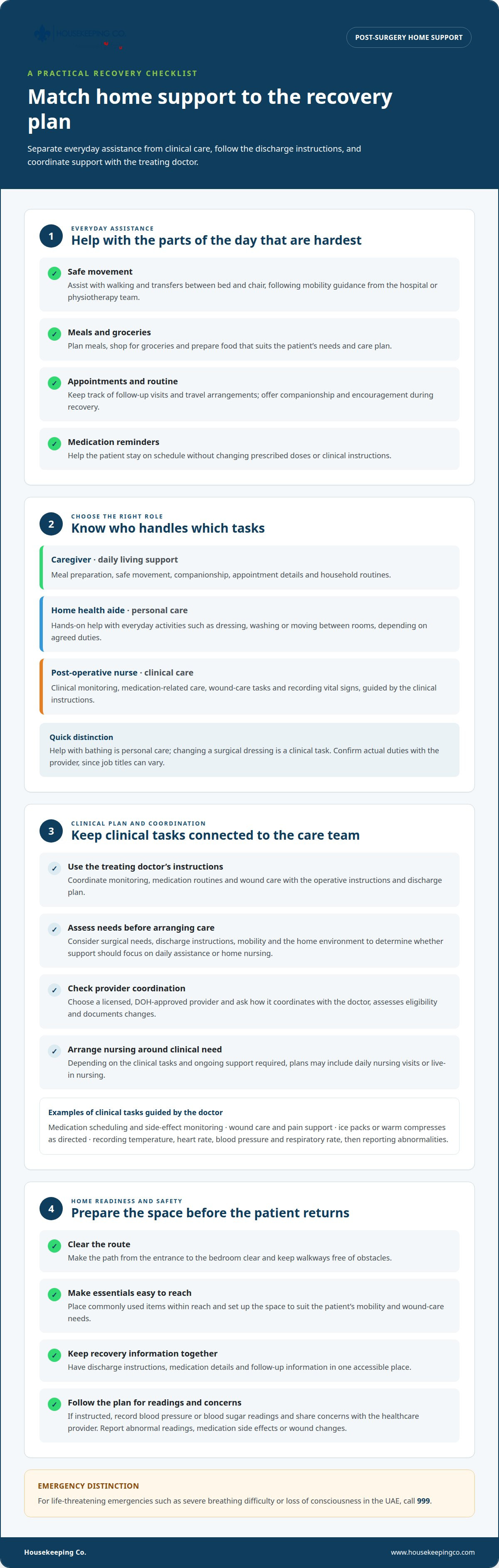
In Abu Dhabi, post-surgery home care can continue the patient’s clinical plan after discharge. Choose a licensed, DOH-approved provider and ensure care is coordinated with the treating doctor. This connection helps align monitoring, medication routines and wound care with the patient’s operative instructions. A caregiver can report changes to the healthcare provider, while nursing professionals handle clinical tasks within their role.
A personalized plan begins with an assessment of the patient’s surgical needs, discharge instructions, mobility and home environment. The assessment helps determine whether support should focus on daily assistance or home nursing. Plans may schedule daily nursing visits or live-in nursing, based on the clinical tasks and level of ongoing support required. For example, a patient with a wound-care routine may need nursing oversight, while someone who mainly needs help moving safely may need practical assistance.
Care can include several defined tasks, guided by the doctor’s instructions:
- Medication scheduling, monitoring for side effects and following prescribed dosages.
- Wound care, pain support and use of ice packs or warm compresses as directed.
- Recording temperature, heart rate, blood pressure and respiratory rate, then reporting abnormalities.
- Fall prevention, mobility assistance and emotional support during healing.
When comparing options, ask how the provider coordinates with the doctor, assesses eligibility and documents changes. Review qualified caregiver support for practical household assistance, which is distinct from clinical nursing.
What should I prepare at home before a patient returns from surgery? Clear the route from the entrance to the bedroom, put essential items within easy reach and keep discharge instructions, medication details and follow-up information together. Set up the space to suit the patient’s mobility and wound-care needs.
When should a caregiver contact a doctor or emergency services during recovery? Report abnormal readings, medication side effects or changes in the wound to the healthcare provider. In the UAE, call 999 for life-threatening emergencies such as severe breathing difficulty or loss of consciousness.
Daily living assistance after surgery
After discharge, daily assistance can help patients manage routine tasks while they follow their care plan. A caregiver may support safe walking, transfers between bed and chair, meal preparation and medication reminders. Keep prescribed instructions nearby and organise the day around them. Caregivers should follow the patient’s mobility guidance, not introduce exercises or change clinical instructions.
Practical support can focus on the activities that are hardest after an operation:
- Mobility: Help the patient move around the home safely and follow movement guidance from the hospital or physiotherapy team.
- Meals: Plan meals, shop for groceries and prepare food that suits the patient’s needs and care plan.
- Appointments: Help keep track of follow-up visits and travel arrangements.
- Reminders: Support the patient’s medication schedule without changing prescribed doses.
For elderly patients, reducing fall risks may be a particular priority. Keep commonly used items within reach, clear walkways and arrange help with transfers. If the care plan calls for blood pressure or blood sugar readings, record them as instructed and share concerns with the healthcare provider. These simple routines can also help families notice when additional support may be needed.
Recovery involves emotional adjustment as well as physical tasks. A caregiver can offer companionship, encouragement and a steady routine, while nurses or physiotherapists address clinical needs. Follow the care plan for activity, meals and appointments, and report concerns about mobility or possible complications to the healthcare provider. Household assistance should support, not replace, professional guidance.
When cleaning is the main practical burden, Housekeeping Co.’s on-demand hourly cleaning services can help keep routine chores manageable during recovery.
What is the difference between a caregiver, home health aide, and post-operative nurse in Abu Dhabi?
In Abu Dhabi, distinguish roles by the tasks in the patient’s care plan, not by title alone. A caregiver generally supports daily living, such as preparing meals, helping with safe movement, offering companionship and organising appointment details. This practical assistance helps with household routines, but it does not replace clinical assessment or treatment.
A home health aide commonly provides hands-on support with personal care and everyday activities. For someone recovering from surgery, this could include help with dressing, washing or moving between rooms, depending on the agreed duties. As job titles can vary, identify the actual tasks needed: assistance with bathing, for example, is different from changing a surgical dressing.
A post-operative nurse provides clinical nursing care. Tasks may include administering medication according to the prescribed schedule, monitoring for side effects, wound care and recording vital signs. Nurses can also report abnormal readings or changes to the healthcare provider. These responsibilities are guided by the clinical instructions after an operation.
Use this practical distinction when planning support:
- Caregiver: daily routines, companionship, meal preparation and mobility assistance.
- Home health aide: hands-on help with personal care and everyday activities.
- Post-operative nurse: clinical monitoring, medication-related care and wound-care tasks.
For example, a patient who walks safely but needs help with meals may need daily-living assistance. A patient with a prescribed wound-care routine or clinical monitoring needs nursing care aligned with the doctor’s instructions. Some recovery plans require both kinds of support, with each person’s duties clearly defined.
Before arranging care, list the patient’s needs and match each task to the appropriate role. Include mobility support, personal care, medication routines, wound care and help with appointments. This task-by-task approach clarifies the difference between practical household assistance and clinical nursing for the patient and family.
How soon after surgery can a patient travel home and start receiving caregiver support in Abu Dhabi?
Post-operative care begins in the clinic and often continues at home after discharge. The hospital’s discharge plan sets the transition, but there is no single timeline for every operation. Before travel, clarify the patient’s mobility needs, how they will get home and what help they will need on arrival. Organise support around the discharge plan rather than assuming every patient follows the same schedule.
Prepare for the handover before leaving the hospital. Gather the patient’s written instructions, medication schedule and follow-up details, then make them easy for the household support person to access. Agree who will handle practical tasks and who will manage clinical care. For example, one person can organise the journey while another prepares the patient’s room.
Use this sequence to organise the transition:
- Review the plan: Collect the discharge instructions and note the next steps the patient must follow.
- Arrange the journey: Plan transport around the patient’s movement needs and the hospital’s guidance.
- Prepare the home: Clear the route indoors and set up a comfortable recovery space.
- Allocate responsibilities: Identify who will provide household assistance and who will handle clinical follow-up.
At home, keep discharge documents and contact details together. This gives family members a clear reference when coordinating an appointment or communicating a concern. The person supporting the patient can also note questions as they arise, helping the family raise them at follow-up.
Before the patient leaves, make sure everyone understands their assigned tasks and the plan for getting home. A simple written handover keeps arrangements clear during the transition from hospital care to recovery at home in Abu Dhabi.
Hire Full-Time Live-In/Out Nanny or Maid in Dubai
Housekeeping Co helps families in Abu Dhabi manage household responsibilities while a patient focuses on recovery. Full-time live-in or live-out maids and nannies can support routine household needs, while on-demand hourly cleaning can help with chores. These services provide household assistance, not clinical nursing, wound care or medical monitoring, so follow the patient’s post-operative care plan for those needs.
Families can also hire a nanny or maid under private sponsorship. Housekeeping Co offers a 2-year worker visa for domestic workers. Choose the arrangement that fits the household’s ongoing needs, whether that means full-time help or occasional cleaning support.
For reliable household assistance during your post surgery recovery caregiver Abu Dhabi needs, contact Housekeeping Co or visit www.housekeepingco.com.
Plan the Next Step in Home Recovery
A smoother transition home starts with a clear division of responsibilities. Keep clinical instructions with the patient’s healthcare team and identify the household tasks family members need help managing. This distinction helps everyday assistance support recovery without being mistaken for nursing care.
If you’re arranging a post-surgery recovery caregiver in Abu Dhabi, write down what practical support is needed at home and when it is needed. This list can help your family organise household responsibilities around the patient’s recovery plan. For households in Dubai, domestic-worker support can help manage routine duties while the patient concentrates on recovery. Housekeeping Co. can arrange suitable household assistance through its services.
Choose a practical next step that reduces the household workload and keeps attention on the patient’s needs. A clear plan gives family members an organised way forward.
Contact Housekeeping to discuss household support options.
With household arrangements in hand, your family can focus on supporting recovery day by day.
Frequently Asked Questions
What qualifications and licenses should a post-surgery caregiver in Abu Dhabi have?
When arranging post-surgery recovery caregiver support in Abu Dhabi, choose a home care provider licensed and approved by the Department of Health (DOH). Match each worker’s credentials to assigned duties. For nursing tasks, request the nurse’s professional credentials and confirm the provider’s scope of service. A caregiver assisting with meals or mobility has a different role from a nurse providing clinical care. Ask for a written task list before care begins.
What post-surgery care tasks can a caregiver provide at home?
A caregiver can help organise non-clinical routines, such as setting out approved meals, keeping the recovery area tidy, assisting with dressing and accompanying the patient around the home. Agree who will replenish bedside essentials and note questions for the next appointment. Treatment, wound procedures and medication administration should follow the patient’s care plan and remain within the assigned professional’s scope of practice.
What are the risks of hiring an unlicensed caregiver in Abu Dhabi, and how can I verify credentials?
The main concern is being unable to verify accountability or whether clinical duties match the worker’s training. Don’t assign medication administration, wound care or vital-sign monitoring based only on a job title. Request the organisation’s DOH licence and the nurse’s credential details, then verify them through official DOH channels before arranging clinical care. Keep copies with the patient’s discharge paperwork.
Which Abu Dhabi hospitals or agencies arrange post-discharge home care?
Start with the hospital discharge team and ask whether the patient’s plan calls for home nursing. Request a written handover covering care tasks and follow-up arrangements, and clarify how the hospital coordinates discharge. If arranging household help separately, distinguish domestic staffing from clinical home health services. This keeps practical assistance separate from nursing care during the transition home.
Share this


