UAE Trusted Nationality Recruitment: A Family Guide
Oct 05, 2026What if the most important sign of a trusted domestic worker has little to do with nationality? The phrase “recruitment of trusted nationalities UAE” can raise understandable questions, but nationality is a sourcing consideration, not proof of an individual’s character, skills, or suitability. For your household, trust starts with a fair assessment of relevant experience, communication, role requirements, and the quality of the recruitment process.
Choosing a nanny, maid, or caregiver is a significant decision. You need clarity on how candidates are sourced, what to assess beyond background, and how placement and visa administration fit into the process. This guide explains what responsible nationality-based sourcing means in practice, how to compare candidates against your household’s needs, and how specialist recruitment support can make the process more straightforward for families in Dubai, Sharjah, and Abu Dhabi.
Housekeeping Co specializes in UAE domestic recruitment, with full-time live-in and live-out placements and support managing a two-year domestic worker visa. The practical steps below can help you make a considered choice without relying on stereotypes.
Key Takeaways
- Understand “trusted nationalities” as a sourcing approach, not a guarantee about an individual candidate’s character or performance.
- Make recruitment more focused by defining the household role and expectations before candidate sourcing begins.
- Assess candidates against the practical demands of the position, including relevant experience, communication, and responsibilities.
- Approach recruitment of trusted nationalities uae with fair, consistent criteria rather than assumptions about nationality.
- Specialist household recruitment can connect your staffing needs with full-time placements and visa administration.
What Does Recruitment of Trusted Nationalities in the UAE Actually Mean?
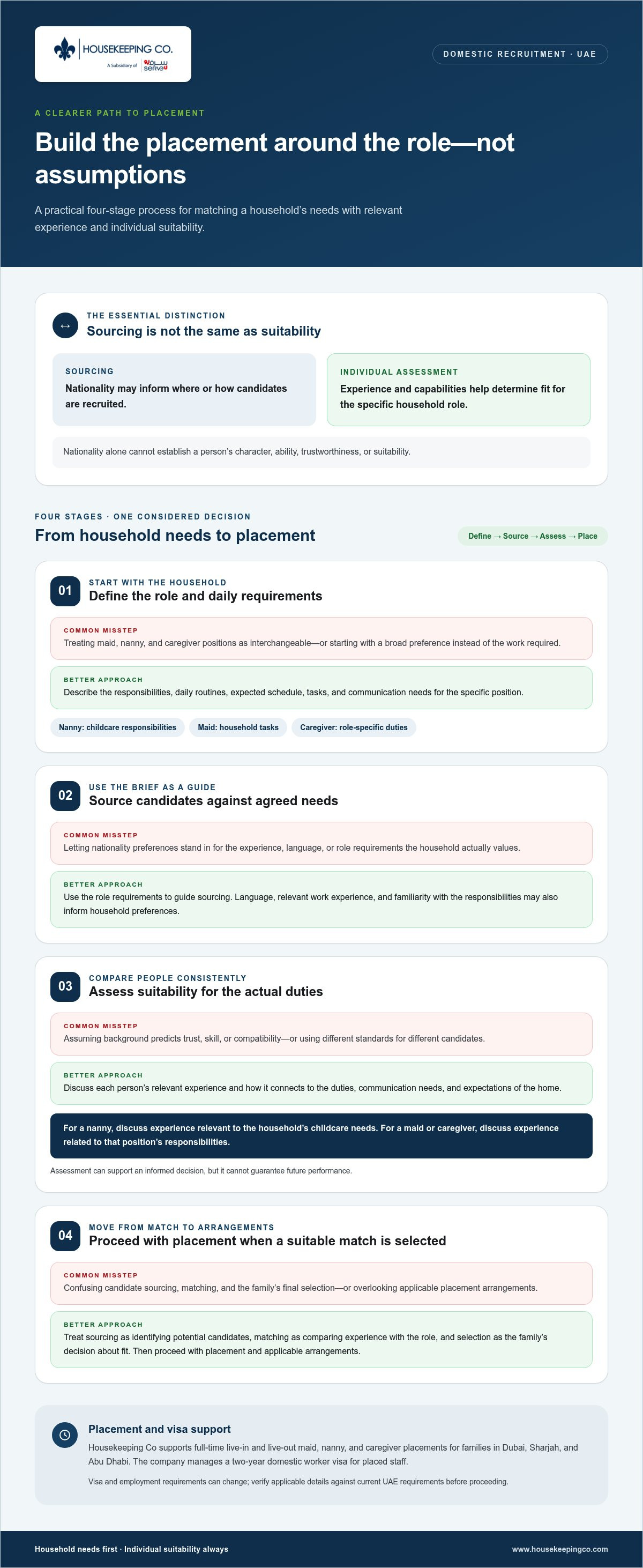
The phrase recruitment of trusted nationalities UAE describes a sourcing approach, not a promise about any individual candidate. A person’s nationality may influence where or how recruitment takes place, but it cannot establish their character, ability, or suitability for a particular household role.
Nationality-based sourcing identifies where candidates are recruited; individual assessment determines whether their experience and capabilities fit the role. This distinction matters in domestic recruitment, where a family is selecting a maid, nanny, or caregiver to work within the routines and expectations of a home. The focus is on matching an individual’s relevant experience and approach to the household responsibilities, not on assumptions about background.
Why Do Families Consider Nationality When Recruiting Domestic Staff?
Nationality can be one of several preferences families consider when describing their needs. A household may also value a particular language, relevant work experience, or familiarity with responsibilities connected to the role. For example, a family seeking childcare support may prioritise a candidate’s childcare experience and communication, while a household hiring a maid may focus on experience with the housekeeping tasks the position involves.
These priorities can guide sourcing, but they should not replace individual assessment. No nationality makes a candidate inherently more trustworthy, skilled, or compatible. The right fit depends on the person’s experience and the actual requirements of the position.
What Should “Trusted” Mean in a Recruitment Context?
In a responsible recruitment process, “trusted” should describe the care taken to source and assess candidates, not a blanket judgement about a nationality. Families can consider information about a candidate’s relevant experience and how it aligns with the responsibilities, communication needs, and expectations of their home.
Clear expectations support a consistent assessment. Before comparing candidates, identify the core duties and qualities that matter for the role. Then evaluate each person against those criteria rather than relying on assumptions about their background.
Recruitment is one part of the household employment relationship, alongside sponsorship and employment arrangements. Housekeeping Co offers full-time live-in and live-out maid placements and domestic staff recruitment support for families in Dubai, Sharjah, and Abu Dhabi. Sourcing may shape who is considered, but individual suitability should guide the decision.
How Domestic Worker Recruitment Works in the UAE
A well-managed recruitment journey starts with the household’s needs, not a candidate’s nationality. For families considering the recruitment of trusted nationalities UAE, a clear process turns preferences into role-specific criteria and supports a more considered placement.
Start with the Household Role and Daily Requirements
First, define the position. A maid, nanny, and caregiver have different responsibilities, so describe the support your household needs rather than treating these roles as interchangeable. Consider the daily routines, expected schedule, and tasks involved. A family seeking childcare support, for instance, should outline the care responsibilities. A housekeeping role needs a clear description of the household tasks expected.
Specific expectations help recruitment focus on relevant experience and practical fit. If you’re considering a residential placement, explore full-time live-in domestic staff as an option for your household.
From Candidate Sourcing to Placement
Recruitment can be understood in four stages:
- Define the role: Set out responsibilities, routines, schedule, and communication needs.
- Source candidates: Use the agreed requirements to guide candidate sourcing.
- Assess suitability: Discuss relevant experience and how it relates to the duties and household expectations.
- Proceed with placement: Once a suitable match is selected, move forward with the placement and applicable arrangements.
Each stage has a different purpose. Sourcing identifies potential candidates; matching compares their experience with the role; selection is the family’s decision about fit. Keep discussions specific. For a nanny, explore experience relevant to your household’s childcare needs. For a maid or caregiver, discuss experience related to that position’s responsibilities. Assessment can support an informed decision, but it cannot guarantee future performance.
Housekeeping Co supports full-time live-in and live-out maid, nanny, and caregiver placements, and manages a two-year domestic worker visa for placed staff. Visa and employment requirements can change, so verify applicable details against current UAE requirements before proceeding. A clear role brief gives recruitment a practical starting point and connects candidate sourcing with placement support.
How to Assess Candidate Fit Beyond Nationality
Assess each candidate against the work your household actually needs. In the recruitment of trusted nationalities UAE, nationality may inform sourcing, but it cannot show whether someone’s experience, communication, and approach match a particular maid, nanny, or caregiver role.
Which Qualities Matter for a Maid, Nanny, or Caregiver?
Start with the role. For housekeeping, consider relevant household experience and how it aligns with your routines and expectations. For a nanny, focus on the childcare responsibilities involved and the support your family needs. For a caregiver, define the care-related support required and distinguish it from general household duties. The more clearly you describe the role, the easier it is to assess relevant experience fairly.
| Role | Relevant experience to discuss | Questions for your household |
|---|---|---|
| Maid | Housekeeping experience related to the tasks and routines the position involves | Which daily household tasks and routines need support? |
| Nanny | Experience relevant to the childcare responsibilities your family expects | What childcare support do you need, and what communication will help day to day? |
| Caregiver | Experience related to the specific care support required | What care-related assistance is needed, and which duties are outside the role? |
How Can Families Compare Candidates Fairly?
Use the same role-related criteria for each candidate. A simple comparison can cover relevant experience, communication needs, responsibilities, and fit with your household expectations. Discuss each candidate’s background in relation to the actual duties rather than treating nationality as evidence of character or ability.
Consistency matters. If communication is essential to your daily routine, consider how each candidate’s communication meets that need. If the role involves specific household responsibilities, focus on relevant experience and how it relates to those tasks. Clear expectations help families compare candidates respectfully and make a decision based on individual suitability.
For dedicated caregiver support, explore qualified caregiver placements. Defining the care needs first keeps the role clear and gives candidate discussions a practical focus.
Responsible Recruitment and UAE-Specific Considerations for Families
Responsible domestic recruitment combines clear role expectations with a fair, individual assessment. Nationality may guide sourcing, but it cannot prove trustworthiness, competence, or compatibility. A family’s decision should rest on relevant experience and how well it relates to the household’s actual needs.
How Can Families Avoid Nationality-Based Assumptions?
Assess every candidate against the same role-related criteria. Discuss experience in relation to the responsibilities, and consider communication in light of your household’s needs. Avoid ranking nationalities or treating someone’s origin as a promise of a particular outcome. In the recruitment of trusted nationalities UAE, responsible sourcing means considering recruitment channels while evaluating each person as an individual.
Keep expectations specific and respectful. Describe what the role involves, then compare each candidate’s relevant background with that description. Consistent criteria make comparisons more useful and help families decide without relying on stereotypes.
What UAE Recruitment and Visa Details Need Careful Checking?
Separate a recruitment agency’s service information from general legal guidance. Housekeeping Co manages a two-year domestic worker visa for placed staff. This service is not a complete explanation of current UAE employment or sponsorship requirements. Rules, eligibility details, and procedures can change, so verify applicable requirements using current UAE guidance before making decisions. For a fuller discussion, refer to the article on UAE domestic worker law.
Keep the process organized with this short family checklist:
- Role clarity: Write down the position, responsibilities, schedule, and household routines.
- Communication: Identify the communication needs relevant to daily work.
- Placement: Compare candidates using consistent, role-related criteria and relevant experience.
- Visa administration: Distinguish placement support from legal requirements, and verify current procedures before proceeding.
These steps help families in Dubai, Sharjah, and Abu Dhabi approach recruitment with care and keep expectations clear for everyone involved. A considered process supports a more thoughtful match without making assumptions about a candidate’s nationality.
How Housekeeping Co Supports Domestic Staff Recruitment in the UAE
Housekeeping Co supports families in Dubai, Sharjah, and Abu Dhabi seeking full-time live-in or live-out maids, nannies, and professional caregivers. The agency recruits directly from trusted nationalities, while candidate suitability remains an individual assessment based on the household’s needs, relevant experience, and role expectations. Nationality can shape sourcing, but it does not replace a considered recruitment and placement discussion.
For families exploring full-time domestic staff, maid hiring and placement options can provide a starting point. Housekeeping Co also manages a two-year domestic worker visa for placed staff, connecting recruitment support with visa administration without treating nationality as a measure of a candidate’s character or ability.
Matching Recruitment Support to Your Household
A productive discussion starts with the role. A household seeking housekeeping support has different needs from one looking for childcare or dedicated caregiving. Specify the responsibilities, expected schedule, household routines, and communication needs. If you prefer a live-in arrangement, include that in the placement discussion so sourcing can reflect the type of support and arrangement you need.
Clear requirements help distinguish essential duties from preferences. That makes it easier to focus candidate discussions on relevant experience and the practical needs of your home, rather than relying on assumptions about nationality.
What to Prepare Before Discussing a Placement
A short outline can make the first conversation more focused. Before discussing recruitment, consider noting:
- Role: Whether you need a maid, nanny, or caregiver.
- Responsibilities: The support you expect and the main duties involved.
- Schedule and routines: How the role fits into your household’s daily pattern and whether you prefer a live-in or live-out placement.
- Communication: Any practical communication needs for daily coordination.
Describe the work and household context clearly. This gives recruitment support a useful basis for discussing sourcing and placement, while keeping the focus on role fit rather than nationality alone. The recruitment of trusted nationalities UAE should help families identify candidates for consideration, not predetermine who is suitable.
When you’re ready, share your household requirements and discuss the support you’re seeking.
Choose Household Support with Clarity
Nationality can guide sourcing, but it cannot determine whether someone is right for your household. A stronger decision comes from defining the role, considering relevant experience and communication needs, and comparing candidates against consistent expectations. That is the practical foundation of responsible recruitment of trusted nationalities UAE.
Housekeeping Co specializes in domestic recruitment in the UAE, offering full-time live-in and live-out maid, nanny, and caregiver placements. With a clear understanding of the support your home needs, you can begin a focused placement discussion and consider the arrangements that suit your family.
Start a conversation with Housekeeping Co on WhatsApp to discuss your household’s placement needs.
A thoughtful process makes the next step easier. Define your priorities, stay focused on individual suitability, and move forward with confidence.
Frequently Asked Questions
What does recruitment of trusted nationalities mean in the UAE?
It refers to sourcing domestic staff from particular national backgrounds, not a guarantee about any candidate. In discussions of recruitment of trusted nationalities UAE, nationality may shape where candidates are sourced, while suitability depends on individual experience, communication, and fit for the household role. Families hiring a maid, nanny, or caregiver should treat nationality as one sourcing consideration and assess each person against the responsibilities involved.
Does a domestic worker’s nationality determine whether they are trustworthy?
No. Nationality cannot establish an individual’s trustworthiness, competence, or compatibility with a family. Those qualities should not be assumed from a person’s background. Instead, families can consider relevant experience, discuss responsibilities clearly, and evaluate how a candidate’s capabilities align with the role. Consistent, respectful assessment helps families make a decision based on the individual rather than a generalisation about a nationality.
How does domestic worker recruitment work in the UAE?
A practical recruitment journey begins by defining the role and household requirements. Candidate sourcing follows, then the family can consider relevant experience, communication needs, and suitability before proceeding with a placement. These stages connect a household’s needs to an appropriate role and candidate. Visa and employment procedures can depend on current UAE requirements, so families should verify the applicable details before proceeding.
What should families consider besides nationality when hiring a maid or nanny?
Focus on the duties, relevant experience, communication needs, schedule, and household routines. For a maid, clarify the housekeeping responsibilities and daily expectations. For a nanny, define the childcare support your family needs and the communication that will help coordinate it. Compare candidates using the same role-related criteria. This keeps the decision centred on individual suitability and the realities of your home, not assumptions based on nationality.
Can families choose a domestic worker based on language and experience?
Yes. Families can include communication needs and relevant experience among their preferences when describing a role. Clear communication may be important for coordinating household routines, while previous experience should relate to the position’s responsibilities. These criteria can guide sourcing and candidate discussions, but they should be assessed individually. Neither language nor nationality alone establishes whether a candidate is right for a particular household.
Does a recruitment agency help with a domestic worker visa in the UAE?
Yes. Housekeeping Co manages a two-year domestic worker visa for placed staff as part of its domestic recruitment support. The agency offers full-time live-in and live-out placements for maids, nannies, and caregivers in Dubai, Sharjah, and Abu Dhabi. Visa support is distinct from general legal guidance, so families should verify current UAE requirements for their own circumstances before proceeding with employment arrangements.
How should a family choose between a maid, nanny, and caregiver?
Choose based on the support your household needs. A maid placement is suited to housekeeping responsibilities, a nanny role centres on childcare, and a caregiver placement focuses on care-related support. Write down the duties, schedule, routines, and communication needs before discussing recruitment. Keeping these roles distinct helps families describe their requirements clearly and compare candidates according to relevant experience and expectations for the position.
Share this


