Nanny Sponsorship in Dubai: 2026 Guide for Families
Sep 28, 2026The visa form is only one part of nanny sponsorship in Dubai. Before you begin, clarify who will legally sponsor the nanny and take responsibility for the employment arrangement. If you’re unsure who handles recruitment, sponsorship and related administrative steps, start by separating those responsibilities.
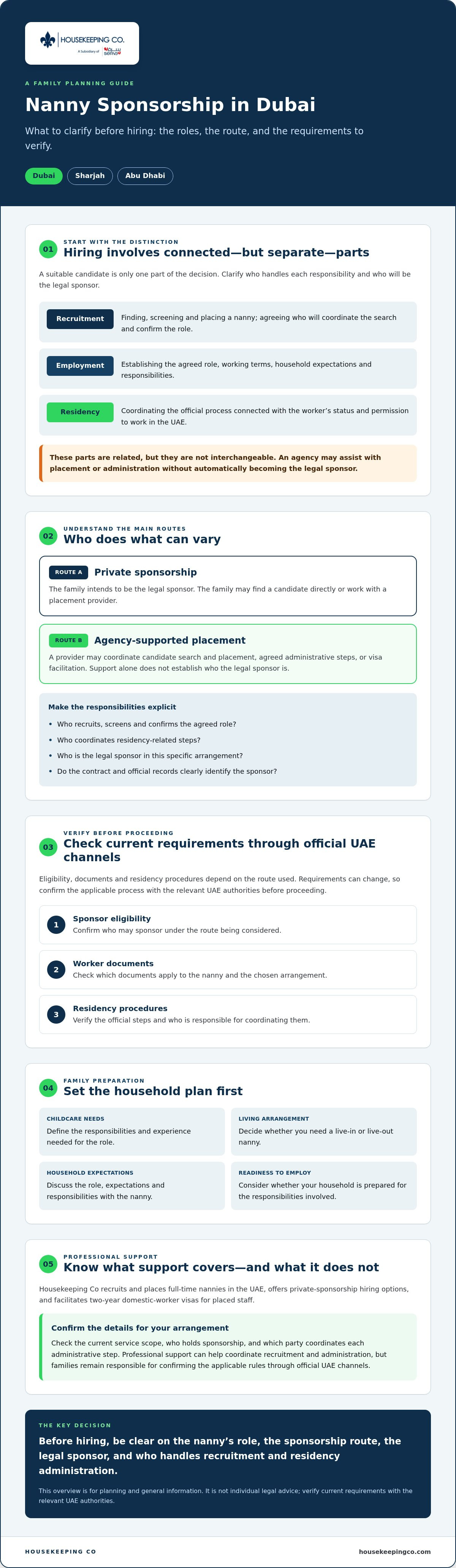
Hiring a nanny involves more than finding the right person. Eligibility, documents and the sponsorship route all need careful attention, and requirements can change. Recruitment means finding and placing a nanny; sponsorship concerns the legal arrangement under which she can work. The two are connected, but they aren’t the same.
This 2026 guide explains what families should confirm before starting, how private sponsorship differs from agency-supported placement, and why current requirements should be checked through official UAE channels. You’ll also learn where professional support may help coordinate recruitment and administration without replacing your responsibility to confirm the applicable rules. Housekeeping Co recruits and places full-time nannies in the UAE and facilitates two-year domestic-worker visas for placed staff. Its services include private-sponsorship hiring options. With the route clarified upfront, families in Dubai, Sharjah and Abu Dhabi can make a more informed plan for their household.
Key Takeaways
- Finding a nanny and arranging her legal sponsorship are separate parts of the hiring decision.
- Compare private sponsorship with agency-supported placement, and confirm who is responsible for each administrative step.
- Before proceeding with nanny sponsorship dubai, verify current sponsor eligibility, worker documents and residency procedures through official UAE channels.
- Set your childcare requirements and household expectations first, including whether you need a live-in or live-out nanny.
- Consider whether coordinated recruitment and visa facilitation could help, while confirming the service scope and applicable requirements.
Nanny Sponsorship in Dubai: What It Means for a Family
Finding a suitable candidate is only one part of hiring a nanny. Families also need to understand the employment and residency arrangement that will allow the nanny to work in the UAE, and who is responsible for coordinating each step. Legal roles and requirements depend on the route used, so confirm them with the relevant UAE authorities before proceeding.
What does sponsoring a nanny in Dubai involve?
Nanny sponsorship in Dubai is the arrangement connecting a domestic worker’s employment with the residency process that permits her to work in the UAE. Recruitment focuses on finding and placing a candidate. Employment establishes the agreed role and working terms. Residency administration concerns the official steps required for the worker’s status. These parts are related, but they aren’t interchangeable.
The family and nanny should understand the role, expectations and responsibilities. Legal terminology, documents and obligations can vary by sponsorship route, so don’t rely on informal descriptions alone. For general background, the Kafala system is an explanatory overview, not a substitute for current UAE guidance or legal advice.
Why families should understand sponsorship before hiring
Sponsorship choices affect more than paperwork. They should fit your household’s childcare needs, the nanny’s working arrangement and your readiness to meet the responsibilities attached to employing domestic staff. For a live-in role, for example, consider the practical household arrangements as well as the candidate’s experience and the administrative route.
Before agreeing to hire, establish who will recruit or place the nanny, who will coordinate residency steps, and which party will be the legal sponsor. An agency may assist with placement or administrative coordination, but that doesn’t automatically make it the sponsor. Confirm each party’s role and the current process with official UAE channels, since requirements and procedures can change.
If you’re still defining the role, review the practical considerations involved in choosing a full-time live-in nanny service. Housekeeping Co recruits and places full-time nannies in the UAE and facilitates two-year domestic-worker visas for placed staff. Confirm the current scope and terms of any support directly before deciding.
This section is an educational overview, not individual legal advice. Use it to frame the right questions, then verify applicable requirements through the relevant authorities before hiring.
Who Handles Nanny Sponsorship in Dubai? Understand the Main Routes
The key question isn’t simply whether you’ll use an agency. It’s who will be the legal sponsor, who will manage recruitment, and who will coordinate each residency-related step. In nanny sponsorship Dubai arrangements, these roles can sit with different parties, so confirm them before you commit.
Private sponsorship versus agency-supported placement
With private sponsorship, the family intends to be the sponsor. An agency-supported arrangement may involve a provider finding and placing a nanny, coordinating agreed administrative steps, or facilitating visa processes. Agency support doesn’t automatically mean the agency becomes the legal sponsor. The contract and official records should make the sponsor’s identity clear.
Housekeeping Co offers nanny placement, private-sponsorship hiring options and two-year domestic-worker visa facilitation for placed staff. Confirm the current service scope and who holds sponsorship in your particular arrangement. For broader hiring considerations, see this guide to a full-time live-in nanny service. For wider context on sponsorship systems and their implications for migrant workers, consult the Council on Foreign Relations’ analysis of the Kafala system.
| Area | Private sponsorship | Agency-supported placement | Confirm before proceeding |
|---|---|---|---|
| Recruitment | Family may find a candidate directly or use a placement provider. | Provider may coordinate candidate search and placement. | Who recruits, screens and confirms the agreed role? |
| Sponsorship | Family may be the intended legal sponsor. | Provider support does not establish who the legal sponsor is. | Who is named as sponsor in official records and agreements? |
| Administration | Family may coordinate documents and follow-up, depending on the route. | Provider may assist with specified steps. | Who supplies documents, submits applications and tracks follow-up? |
Questions to ask before choosing a sponsorship route
Get responsibilities in writing rather than relying on a general promise of “visa support.” Ask:
- Who is the legal sponsor, and which party handles each administrative step?
- Which documents must the family and worker provide, and who checks them?
- What follow-up is included after placement, and what falls outside the service?
- Which current requirements apply to your circumstances and chosen route?
Confirm the applicable process directly with the Ministry of Human Resources and Emiratisation (MOHRE), the Federal Authority for Identity, Citizenship, Customs and Port Security (ICP), or the General Directorate of Residency and Foreigners Affairs in Dubai (GDRFA Dubai), as relevant. Requirements can vary or change, and neither private sponsorship nor agency support is universally available or preferable. A written division of responsibilities helps you assess which route fits your situation.
Nanny Sponsorship Requirements in Dubai: What to Verify First
Before arranging a nanny’s employment or residency, confirm the current requirements for your specific sponsorship route. Eligibility, supporting evidence and application steps may depend on individual circumstances and can change. Treat this as a pre-check, not a definitive government checklist. Don’t rely on old online lists or assume a requirement for one route applies to another.
Which documents and eligibility details should families confirm?
For nanny sponsorship Dubai, start by checking what applies to both the proposed sponsor and the worker. Ask the relevant authority which evidence is required, in what format and at what stage. A document list shared by a friend or service provider may not be complete or current.
- Sponsor eligibility: Confirm who may sponsor under the route you’re considering and what evidence the sponsor must provide.
- Identity and residency records: Check which identity, passport or UAE residency documents are required, and whether any validity conditions apply.
- Worker documentation: Ask which worker records are needed and whether they must be translated, attested or submitted in a particular way.
- Medical fitness: Verify whether a medical fitness examination applies, where it must be completed and how its result is used in the process.
- Residency steps: Confirm the sequence, application channel and any deadlines that apply to the nanny’s circumstances.
Keep the answers and official instructions together. This gives your family and any placement provider a shared reference point without treating an informal checklist as legal confirmation.
Which UAE authorities should readers consult?
Use official channels to establish which authority handles each part of your case. The Ministry of Human Resources and Emiratisation (MOHRE) is a starting point for confirming domestic-worker employment requirements. The Federal Authority for Identity, Citizenship, Customs and Port Security (ICP) can be consulted for federal identity and residency guidance, including questions about Emirates ID. For Dubai-specific residency matters, check directly with the General Directorate of Residency and Foreigners Affairs in Dubai (GDRFA Dubai).
For medical fitness, ask the relevant government channel which provider and procedure apply to the worker’s case. Don’t assume requirements or appointment arrangements are identical across circumstances. MOHRE, ICP and GDRFA Dubai may each be relevant to different questions, so confirm the responsible authority rather than treating one office as the source for every step.
Before acting, record the date you checked, the authority’s instructions and any case-specific guidance you received. If an agency is coordinating documents or follow-up, ask it to distinguish administrative assistance from official approval. The authority handling the application remains the source for current requirements and decisions.
How to Prepare for Nanny Sponsorship in Dubai: A Family Checklist
Good preparation starts with the job, not the paperwork. Define the support your household needs, then use that brief to clarify sponsorship responsibilities and the questions you’ll take to an agency or official enquiry. This checklist is for planning, not a government application sequence, and completing it doesn’t guarantee eligibility or visa approval.
Define your nanny role and household requirements
Be specific about the childcare role before discussing candidates. A clear brief helps you assess whether the arrangement suits your family and gives a placement provider useful context.
- 1. Set out the childcare needs. Note the children’s ages, the care you’re seeking and any relevant experience you’d like a nanny to have.
- 2. Choose a work arrangement. Decide whether you’re considering live-in or live-out support. If residential support may suit your household, review the full-time live-in nanny guide.
- 3. Clarify expectations. Record the anticipated schedule, language preferences, household routines and practical arrangements. Discuss these openly so expectations can be reflected in the hiring conversation.
- 4. Keep the role focused. Distinguish childcare responsibilities from broader domestic-worker duties or specialist caregiver needs. Describe what you’re asking the nanny to do, rather than assuming every household task belongs in the role.
Prepare questions for an agency or official enquiry
Bring your role brief and use the discussion to establish who does what. Ask for clear answers in writing, especially when recruitment, visa facilitation and ongoing support are separate parts of the arrangement.
- 5. Confirm the division of responsibilities. Who recruits and places the nanny? Who is the intended legal sponsor? Who coordinates each administrative step, and which party supplies each document?
- 6. Verify the requirements. Ask which current rules apply to your chosen route and circumstances, and which UAE authority can confirm each point. Request the official source rather than relying only on verbal guidance.
- 7. Define provider support. Ask what recruitment and visa facilitation include, what follow-up is available after placement, and what falls outside the agreed service. Review the written scope before proceeding.
- 8. Keep a decision record. Save written answers, confirmed responsibilities and outstanding questions. Resolve uncertainties with the relevant authority before making commitments.
Confirm the current service terms and applicable requirements directly. Preparation can make conversations clearer, but only the relevant authorities can confirm official requirements and decisions.
Getting Nanny Sponsorship Support in Dubai: When an Agency Can Help
Professional support can be useful when your family needs help finding a nanny and wants a clearer view of the administrative steps involved. Recruitment, placement and visa facilitation are distinct from official eligibility decisions or approvals. For nanny sponsorship Dubai, confirm who will be the legal sponsor, exactly what the provider will coordinate and which matters you must handle directly.
What to expect from specialist nanny placement support
A domestic recruitment agency may help families define a role, identify suitable candidates and coordinate agreed placement steps. Some providers also facilitate visa processes, but the term “support” can cover different services. Ask for the scope in writing, including which documents the provider helps coordinate, what follow-up is included and what remains your responsibility. Government authorities, not a recruitment provider, determine official requirements and decisions.
Housekeeping Co is a specialised domestic recruitment agency in the UAE. It recruits and places full-time nannies and facilitates two-year domestic-worker visas for placed staff. Its service information also describes hiring a nanny under private sponsorship. Confirm the current visa facilitation terms and the sponsor’s identity directly before engaging. If your household is considering residential support, you can review the full-time live-in nanny service as part of defining the role. Housekeeping Co serves households in Dubai, Sharjah and Abu Dhabi, as well as elsewhere in the UAE.
Choose a clear next step for your family
Move forward in a deliberate order. First, verify current requirements with the relevant UAE authority. Next, clarify the sponsor’s responsibilities and the provider’s written service scope. Then discuss your household’s childcare needs and the type of placement that may suit them. This preparation helps you assess options, but it doesn’t establish eligibility or guarantee an application outcome.
Before speaking with a provider, gather your role preferences and list unanswered questions about recruitment, sponsorship, documentation and follow-up. Ask the provider to distinguish clearly between placement assistance, visa facilitation and responsibilities that remain with your family. Clear answers make it easier to decide whether the proposed support matches your needs.
If you’d like to discuss your family’s nanny placement needs and ask what support may be relevant, contact Housekeeping Co through WhatsApp.
Make Your Nanny Hiring Plan Clear and Confident
Start by defining the role your household needs, then confirm who will be the legal sponsor and who will coordinate recruitment and residency administration. Requirements can depend on your circumstances, so verify current guidance through the relevant UAE authorities before proceeding. A placement provider may help coordinate agreed steps, but it can’t replace official confirmation or guarantee an outcome.
Housekeeping Co recruits and places nannies and facilitates two-year domestic-worker visas for placed staff. If you’re considering nanny sponsorship dubai, confirm the current service terms, sponsor identity and division of responsibilities before making a decision.
A considered plan makes it easier to choose a suitable hiring route and move forward with clarity. Discuss your family’s needs and the support you’re seeking, then verify any outstanding requirements with the appropriate authority.
Frequently Asked Questions
Can I sponsor a nanny in Dubai under my own sponsorship?
You may be able to, but confirm current eligibility and sponsorship rules with the relevant UAE authorities before making plans. Requirements can depend on current regulations and your circumstances, so don’t rely on old checklists or assumptions. Clarify who will be the legal sponsor and who will handle each administrative step. A recruitment agency may support placement or visa coordination, but confirm its exact role directly.
What documents are needed to sponsor a nanny in Dubai?
The required documents depend on current official guidance and may vary with your circumstances and chosen route. Before starting, request an up-to-date checklist from the relevant authority or service provider, and confirm who must supply each item. For assistance with document clearance and administrative paperwork across the UAE, government services providers such as Goodhand can help families navigate official requirements efficiently. Treat online lists as a starting point, not a final determination. Protect personal information: don’t submit sensitive documents through channels you haven’t verified as official or trustworthy.
How do I start the nanny sponsorship process in Dubai?
Start by defining the childcare role and deciding whether you’re considering private sponsorship or agency-supported placement. Then verify current sponsor eligibility, document requirements and administrative steps through official UAE sources. Before proceeding, get written clarity on who handles recruitment, documentation and follow-up. This preparation helps you ask focused questions, but one process may not apply to every household or sponsorship arrangement.
Can an agency sponsor a nanny for my family in Dubai?
Not necessarily. An agency may recruit or place a nanny and assist with visa-related administration, but that doesn’t automatically make it the legal sponsor. Ask the provider to explain in writing who sponsors the worker, which administrative steps it handles and which responsibilities remain with your family. Before committing, compare that description with current official requirements and make sure the arrangement is clear to all parties.
What is the difference between private nanny sponsorship and agency support?
Private sponsorship means the family takes on sponsorship responsibilities, subject to current rules and eligibility. Agency support may cover recruitment, placement or help coordinating administrative steps, but it doesn’t automatically make the agency the sponsor. For nanny sponsorship Dubai, compare the responsibilities, service scope and follow-up arrangements in writing. Then verify the proposed arrangement with the relevant UAE authorities before making a commitment.
How long does nanny sponsorship take in Dubai?
There isn’t one timeline that families should assume applies to every case. Timing can depend on the process used, whether documents are ready and current authority procedures. Ask the relevant authority or service provider for a current estimate, what might affect it and whether any steps must be completed before the nanny starts work. Treat an estimate as guidance, not a guaranteed completion date.
Does nanny sponsorship cover the nanny’s employment responsibilities too?
Sponsorship and employment are connected, but they aren’t identical. Before hiring, understand the applicable employment responsibilities, the agreed role and the administrative obligations attached to your chosen arrangement. Make sure written agreements explain each party’s responsibilities, and confirm current requirements through official UAE guidance. This general information can help you prepare questions, but it isn’t legal advice for your family’s specific circumstances or employment agreement.
Share this


